An outdoor herb garden gives fresh flavour a few steps from the kitchen, and it is one of the easiest gardens to keep productive. Herbs need less space than vegetables, many are perennial and return each year, and most prefer sun and soil that drains freely. A herb garden that is planned by water needs, rather than by looks alone, is much easier to water and harvest than a bed where thirsty and drought loving herbs are mixed together.
This guide helps you choose a site, group herbs sensibly, plant for a long harvest and keep plants healthy. It covers annual, biennial and perennial herbs, because their care differs, and it notes which herbs spread fast and should be contained. Herb use in cooking is general, and this guide does not give medical advice about herbs.
Choosing a site and a layout that works
A sunny spot near the kitchen is ideal, because you will pick herbs often and a distant bed is easy to forget. Herbs need sun to develop flavour, and most need at least six hours of direct sun in the growing season. Shelter from strong wind helps, because wind dries soil and damages soft growth, but avoid a spot that is completely still and damp, where disease can build up. A path or stepping stones through a larger herb bed let you reach plants without compacting soil.
Layout can be simple: a rectangular bed divided by paths, a set of pots by a door, or a raised bed near the kitchen. A bed about one metre wide lets you reach plants from both sides. If you use pots, group them by water needs as well, so one watering routine does not suit one pot and drown another. Label plants, especially when young, because many herbs look similar before they mature, and a label saves picking the wrong plant by mistake.
Think about winter as well as summer. Perennial herbs such as rosemary, thyme and sage need a spot that does not stay waterlogged in winter, because wet cold kills more herbs than cold alone. In very cold areas, tender herbs such as basil need to be grown as annuals outdoors, or brought inside for winter. A herb garden that looks good in summer but loses plants each winter usually has a drainage problem, not a plant choice problem.
Grouping herbs by water, soil and habit
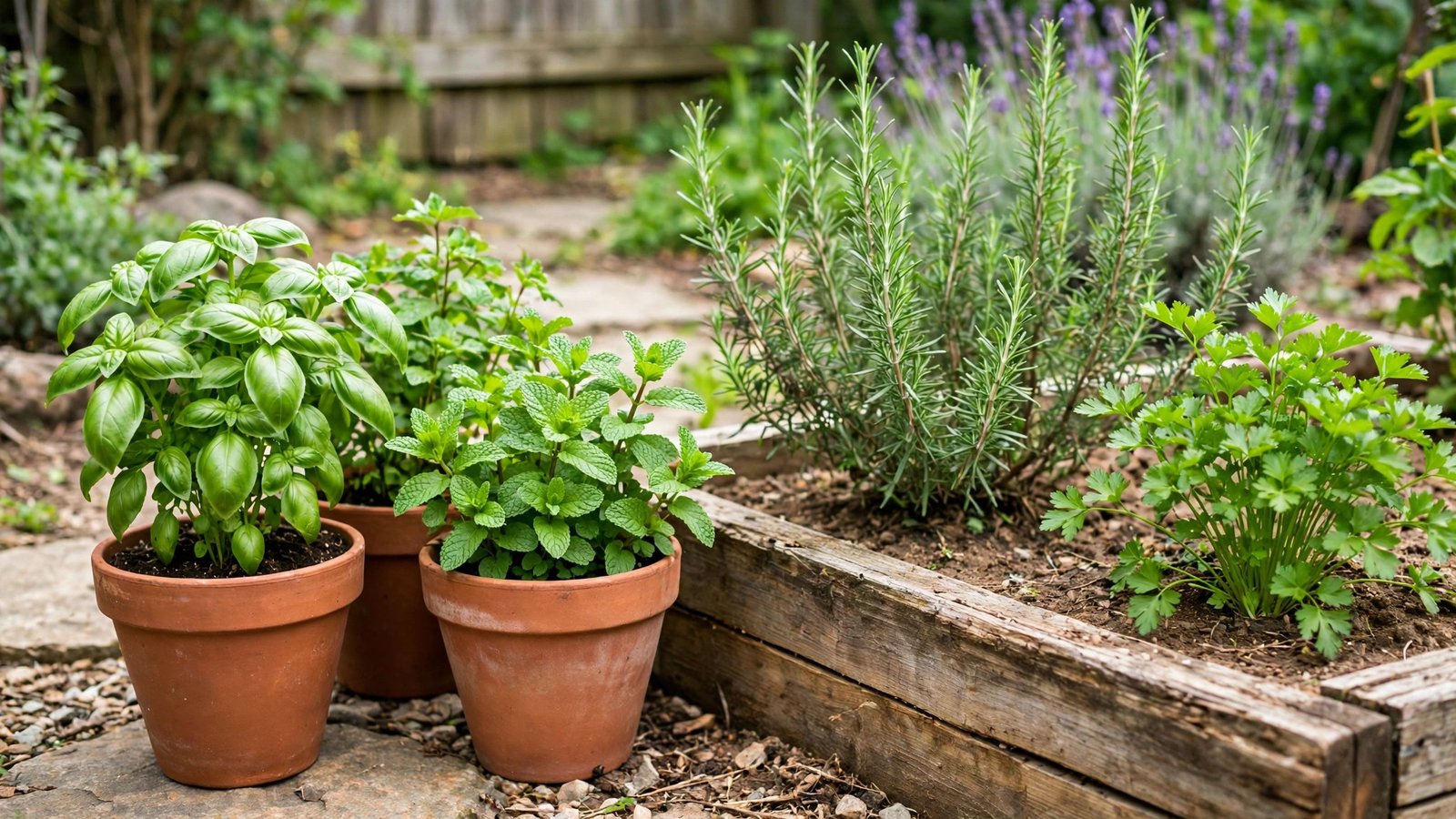
Herbs fall into groups that make watering and care much easier when kept together. Mediterranean herbs, including rosemary, thyme, oregano and sage, prefer poor, well drained soil and less water, and they suffer in rich, wet soil. Soft herbs, including basil, parsley, chives and mint, prefer richer, moister soil and more regular watering. Planting these two groups in separate beds or separate pots avoids the common mistake of watering all herbs the same way.
Growth habit matters too. Mint, lemon balm and some oregano spread by runners and will take over a bed if left unchecked. Plant them in pots, or sink a pot into the bed with the rim above soil level to contain roots. Woody herbs such as rosemary and bay can grow large over years, so give them space and do not plant them where they will shade smaller herbs. Annual herbs such as basil and coriander need replanting each year, so leave space in the plan for succession sowing.
Soil for most herbs should be free draining and not overly rich. Work compost into the bed for soft herbs, but keep soil leaner for Mediterranean herbs, adding grit or coarse sand to heavy soil to improve drainage. Avoid fresh manure around herbs, because it can be too rich and can scorch young plants. A mulch of gravel around Mediterranean herbs keeps soil dry at the surface and reflects warmth, while a mulch of compost around soft herbs holds moisture.
Planting and first season care
Plant herbs after frost risk has passed for tender types, and in spring or early autumn for hardy perennials, so roots establish before extreme weather. Set plants at the same depth they were growing in pots, water well, and firm soil gently. Space plants to their mature size, because a herb bed planted too closely becomes tangled and hard to pick, and air flow suffers. Leave paths and gaps for growth, even if the bed looks sparse at first.
Water newly planted herbs regularly until roots establish, then water according to group. Soft herbs need steady moisture, especially in pots, while Mediterranean herbs need watering only when soil is dry below the surface. Check soil with a finger before watering, rather than watering on a fixed day, because weather changes the need from week to week. Feed lightly, if at all, because overfeeding produces soft growth with less flavour in many herbs, and it can make plants more prone to pests.
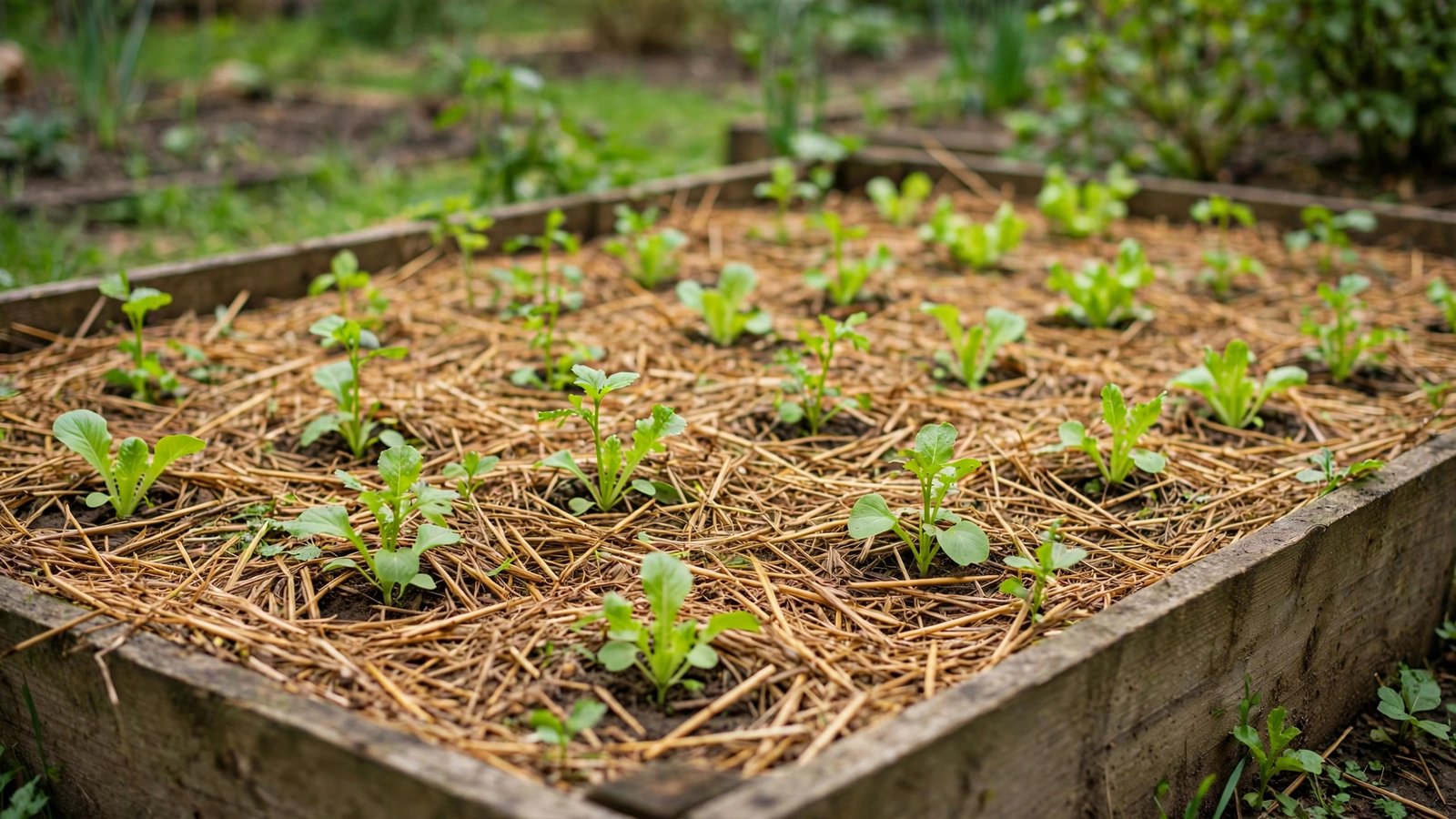
Pinch out growing tips on basil and other soft herbs to encourage bushy growth, and remove flower heads from herbs grown for leaves, such as basil and mint, because flowering can make leaves taste bitter and slow leaf production. For herbs grown for flowers or seed, such as dill and coriander, let some plants flower and set seed. Keep the bed weeded, because weeds compete for water and make picking harder, and a light mulch helps while plants establish.
Harvesting, drying and storing herbs
Pick herbs in the morning after dew has dried, when oils are at their best, and use clean scissors so stems are cut cleanly rather than torn. Pick outer leaves or tips first, and never strip a plant bare, because leaves feed the plant and help it regrow. For perennial herbs, take no more than a third of the plant at once, and leave enough growth for the plant to recover. Regular picking is better than one large harvest, because it keeps plants compact and productive.
Use fresh herbs promptly for the best flavour, storing cut herbs briefly in a cool place wrapped in a damp cloth or standing in water. For drying, tie small bunches and hang in a warm, airy, shaded spot, or spread leaves on a tray. Herbs are dry when leaves crumble easily, and they should then be stored in airtight jars away from light and heat. Dried herbs lose flavour over time, so use them within a year and label jars with the herb name. Freezing works well for soft herbs such as parsley and basil, chopped and frozen in small portions.
Wash herbs before use, especially if pets or wildlife visit the garden, and check for insects or soil. Do not use herbs that have been sprayed with a product not labelled for food plants, and wash hands after handling soil or compost. If a herb has been treated for pests, wait the interval given on the product label before picking, or discard affected growth. When in doubt, do not pick from a treated plant until you have checked the label.
Keeping a herb garden productive year after year
Perennial herbs need occasional renewal. Woody herbs such as sage and lavender become woody and less productive after several years, and replacing them with young plants gives better leaf quality. Thyme can be trimmed after flowering to keep it compact, while rosemary should be pruned lightly and never cut back into old wood with no leaves, because it may not regrow from there. Bay can be pruned into shape in spring, but take care with large cuts on a mature plant.
Divide chives, mint in pots and other clump forming herbs every few years to refresh growth. Lift the clump, divide it with a fork or knife, replant healthy sections and discard woody centres. Annual herbs need succession sowing: sow a small batch every few weeks through the growing season, so fresh plants replace older ones that have flowered or become tough. Keep a note of sowing times and varieties that performed well, because herb varieties differ in flavour and hardiness.
In autumn, tidy the herb bed without cutting back everything. Remove annual herbs that have finished, clear diseased material, and leave some stems for insects over winter. Protect tender herbs in pots by moving them to shelter, and check drainage so pots do not sit in water over winter. A herb garden that is planned, grouped by needs and picked regularly will give fresh herbs for most of the year, with only a short break in the coldest weeks, and it will need less work than a bed planted without a plan.
Herbs for shade, pots and small spaces
Not every herb needs full sun. Mint, parsley, chives and lemon balm tolerate partial shade, and they suit a spot that gets morning sun and afternoon shade. Coriander often does better with some shade in hot weather, because it bolts, or runs to seed, faster in heat. If your only space is shaded, focus on these shade tolerant herbs rather than trying to grow sun loving Mediterranean herbs in poor light, where they will grow leggy and flavourless.
Pots suit herbs well, especially on a balcony or by a door. Use pots with drainage holes, a free draining mix, and a size that suits the plant: mint needs a pot of its own, while thyme and oregano can share a wide shallow pot if water needs match. Pots dry out faster than beds, so check moisture often in summer, and feed lightly during the growing season. Move pots to shelter in winter, and raise them on feet so water drains freely and pots do not freeze to the ground.
Related guides
- Starting a Vegetable Garden for Beginners
- Growing Herbs on a Windowsill
- Container Gardening on a Balcony
Frequently asked questions
Can I grow herbs in the same bed as vegetables?
Yes, if water and sun needs match. Parsley, chives and basil grow well near vegetables, while rosemary and thyme suit a drier edge of the bed. Keep mint in a pot, even in a vegetable bed, to stop it spreading.
Why does my basil keep dying outdoors?
Basil is tender and dislikes cold nights, wet soil and cold wind. Wait until nights are reliably warm, plant in sun and well drained soil, and water the soil, not the leaves, in the morning.
Are herbs safe to pick after rain?
Yes, after washing. Rain can splash soil onto leaves, so wash herbs before use, and avoid picking from soil that has been treated with a product not labelled for food plants.